OpenBiota
THE HUMAN MICROBIOME

Radically great AI
gut health test.

1,600+ metrics. 300+ pages. Clear explanations. Validated research.

From your sample to free AI insights. How?

OpenBiota is free software, source available under the PolyForm Noncommercial License, that combines state-of-the-art AI, machine learning ensembles, and advanced bioinformatics with published open-science databases to turn shotgun sequencing data from a small stool sample into a deeply detailed, personalized gut health report.

Understand what’s there. What it can do. And what’s worth investigating next.

A free sample report and a guide to using OpenBiota with your own sequencing data.

OPEN SCIENCE.REAL RESEARCH.FREE & OPEN SOURCE.
A dramatically lit marble bust of Hippocrates
AN ANCIENT IDEAA NEW PERSPECTIVE
“All disease
begins in the gut.”
— Hippocrates
FROM ANCIENT WISDOM TO MODERN AI01 / ∞
THE OPENBIOTA REPORT

World’s deepest
gut health metrics.
Easy to read.

Welcome to the world's most detailed comprehensive gut health report. More than 1,600 individual readings connect every DNA fragment in your sample to the living ecosystem in your gut. Disease-pattern scores, metabolic pathways, organism-level evidence, and biological age come together in one deeply personal report.

Every section explains the findings in plain language, with research from over 1,300 published studies beside your results. Follow the evidence, understand its strength, and explore what comes next—all with software that’s free to use and open to improve.

OpenBiotaREPORT SCOPE
300+pages of deeply
personal insight
1,600+Individual readings
485+Pathogen targets
90+Resistance, toxin & virulence determinants

30+ disease patterns · 25+ metabolic pathways · 40+ personalized evidence cards

EXPLAINED · SCORED · LINKED TO RESEARCH
Explore what your report revealsWhat’s living inside you, what it can do, and the evidence behind each finding.
WHAT YOUR REPORT REVEALS

Depth you can explore.
Evidence you can follow.

1,600+

Individual readings. Every one explained.

485+ pathogen verdicts. 630+ disease-pattern scores across 30+ ranked patterns, 125+ study modules, and 470+ feature-level readings. Hundreds of organisms quantified, each with one share of the whole and its level against the adults who carry it. 90+ resistance, toxin, and virulence determinants. 80+ metabolic values. 11+ microbial guild readings, diversity metrics, sequencing-quality gates, and a biological age estimate from the AI ensemble—every value scored, sourced, and explained in plain language.

485+

Pathogen targets, examined individually.

Bacteria, protozoa, parasitic worms, microsporidia, fungi, and viruses are evaluated against over 7.4 billion reference DNA bases. Each target receives an evidence-based verdict, with quantities where measurable and limits made explicit.

36,000+

Species-level genome bins searched.

Every genome bin detected is quantified—over 200 in a single sample—against a catalog built from more than a million genomes, including 11,000+ organisms never cultured in a laboratory.

90+

Resistance, toxin, and virulence determinants.

580+ gene families add another layer of resolution: which genes an organism carries, and what those genes can reveal about its potential behavior.

30+

Published disease-pattern scores.

530+ curated directional features across 130+ study modules link the patterns to named research cohorts, with ranked resemblance scores, contributing signals, and evidence strength explained.

25+

Metabolic pathways.

58+ gene-family measurements describe producing capacity for butyrate, propionate, GABA, serotonin and dopamine precursors, bile-acid transformations, TMAO, oxalate, vitamins, and more.

11+

Curated microbial guilds.

Functional groups of organisms read together and placed against the reference cohort: butyrate producers, mucin degraders, methanogens, sulfate reducers, hexa-acylated LPS carriers, oral-origin organisms, polyphenol metabolizers, resident bifidobacteria, probiotic species, opportunistic pathobionts, and health-associated core species.

WHAT MAKES IT DIFFERENT

Rigorous enough to question.
Clear enough to understand.

800+

Automated tests.

Checks enforce coverage, source traceability, and honest uncertainty. The report identifies targets it couldn’t resolve and explains why.

1,300+

Published studies behind the report.

2,000+ linked sources—journal papers, PubMed records, dataset accessions, CDC and FDA guidance—stand behind the analysis, cited beside the findings they support. Follow the evidence directly from the result.

195+

Non-prescription agents in the evidence base.

Across 95+ organisms, evidence is graded as randomized human trial, observational, animal, or laboratory-only. 40+ entries explain when a normal resident should be left alone.

Disease-pattern resemblance provides research clues, not a diagnosis. Metabolic capacity describes genetic potential, not measured metabolite levels.

Explore the scale behind your reportBillions of reference DNA bases. Millions of genomes. Insights uniquely yours.
7.4B+

Reference DNA bases

Pathogen alignment catalog
2B+

DNA bases per sample

Every supplied read analyzed
7M+

Unique marker genes

Species-resolving signatures
1M+

Reference genomes

Behind the profiling catalog
36,000+

Species-level genome bins

Including uncultured organisms
3,000+

Adult cohort microbiomes

22 studies · 17 countries

Built on published research from

Harvard University National Institutes of Health Stanford University Mayo Clinic Massachusetts Institute of Technology Cleveland Clinic University of Oxford Broad Institute of MIT and Harvard
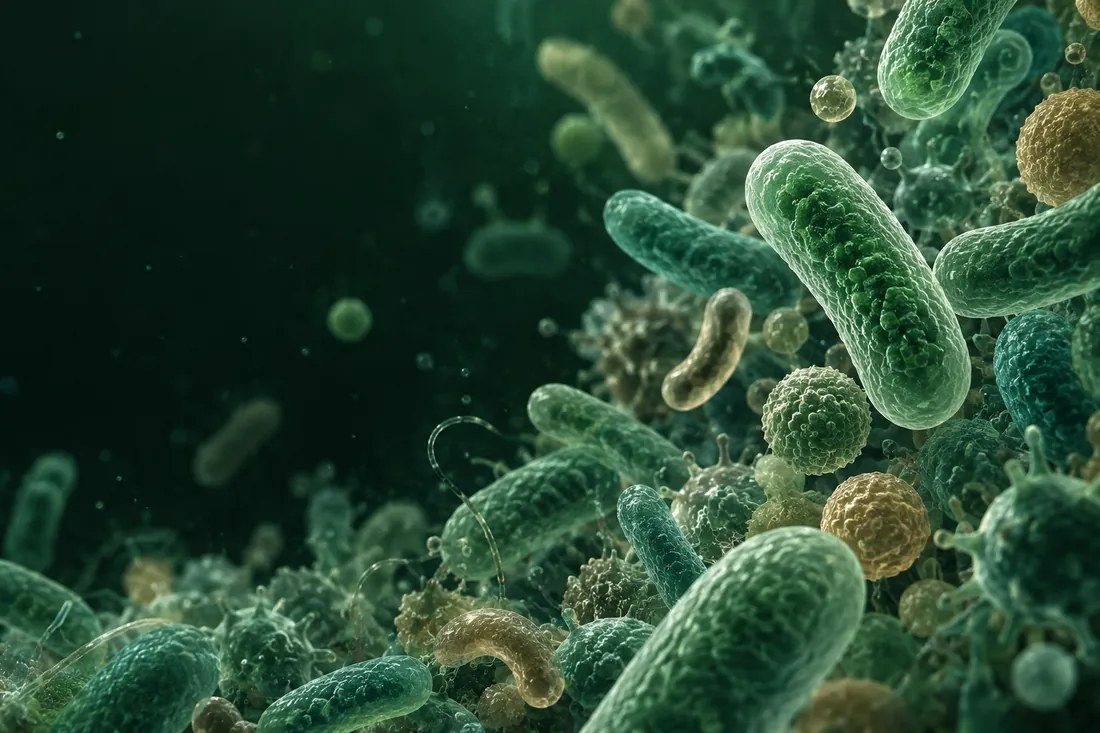
An artistic microscopic ecosystem of translucent microbial forms
01 — TRUST YOUR GUT

It's vital to your health.
Find the answers you're looking for.

Your gut is central to how your whole body functions.

Inside every one of our guts is a vast living ecosystem with trillions of complex organisms critical to our health that help sustain the rest of our body.

Our mission is to give the world access to understand it. To turn raw microbial DNA into knowledge people can explore, understand and act upon—with free, open tools anyone can use and improve. To make the data in the human microbiome open, connected, and usable.

Why the gut matters to your whole bodyImmunity, the brain, metabolism, and the signals that connect them.

Inside every one of our guts is a vast living ecosystem with trillions of complex organisms critical to our health that help sustain the rest of our body. The gut absorbs the nutrients your organs depend on and maintains a critical barrier against harmful microbes. Your gut is home to around 70% of your body’s antibody-producing immune cells. The gut microbiome helps shape how immune defenses work at thier core.

The vagus nerve connects the gut directly to the brain. Gut cells produce over 90% of the body’s serotonin, and the digestive tract produces dopamine, too—chemical messengers with important roles for human happiness and wellness far beyond the brain.

Your liver, pancreas, and gallbladder work with your gut to nourish the body. Microbial compounds enter circulation and are processed by the liver and kidneys. When this ecosystem is disrupted, the consequences can reach far beyond digestion—affecting mood, cognition, metabolism, immune responses, and inflammation, and potentially triggering autoimmune conditions.

Your gut microbiome is critical to your health. Understanding your gut means understanding one of the body's most powerful influences on your health—throughout your body, every day.

Your gut is a living world with trillions of organisms.
Understanding it all must be made simple.

FIND OUT WHAT YOUR GUT CAN TELL YOU.
02 — THE TECHNOLOGY

Metagenetics.
Made meaningful.

Start with the genetic material of an entire community. Follow it through a reproducible, open-source analysis you can run yourself. See how every stage adds depth to your report.

01THE SAMPLE

Sequence the ecosystem.

Tiny Health provides the shotgun sequencing used in the project’s sample workflow: more than 14 million sequencing reads—over 2 billion DNA bases—per sample. OpenBiota analyzes every supplied read, without subsampling.

Tiny Health technology
02THE CODE

Identify microbial DNA.

Nine detection methods over the largest current catalogues — 72,000 species-level genome bins, 346,000 GlobDB genomes, mOTUs, UHGG — merged into one organism list, every call that rests on a single method tested against its relatives by whole-genome mapping.

fastpMetaPhlAnDIAMOND
03THE INTELLIGENCE

Connect the evidence.

Machine learning, ensemble AI, and cohort-based algorithms connect microbial patterns to interpretable predictions, metabolic potential, and ranked disease profiles.

TRPCAMulti-head attentionAI ensembles
04THE REPORT

Make the invisible visible.

300+ pages bring more than 1,600 readings into one navigable story: species, pathways, disease profiles, pathogen screening, and evidence-backed action cards.

Go deeper into the analysis

Machine learning & biological ageDeep learning, TRPCA, and the research behind the age estimate.
01 / MACHINE LEARNING

Advanced algorithms.
Deeper biological insight.

State-of-the-art deep learning and ensemble AI methods model the complex relationships within your microbiome.

Our microbiome age model implements TRPCA, the transformer neural network published by Myers et al. in Nature Portfolio’s Communications Biology (2025). Multi-head attention operates over robust principal components of microbial profiles.

4,800Stool metagenomes used for training
46Independent studies in our training data
48Robust principal components under multi-head attention
Disease-pattern analysis30+ published patterns. Ranked, scored, and connected to their evidence.
02 / DISEASE INTELLIGENCE

Scored. Ranked.
Connected to research.

30+ published disease-pattern profiles, built from 530+ curated directional features, are scored and ranked against 3,000+ adult cohort microbiomes from 22 studies and 17 countries. Cross-engine concordance checks expose disagreement, while feature-level evidence explains what drives each pattern.

Long COVID / ME/CFSIBDMetabolic healthNeuroimmune research

Scores describe disease-pattern resemblance, not diagnostic probability.

COHORT PATTERN ANALYSIS
01Rank
02Rank
03Rank
04Rank
SpeciesGenesEvidence

Illustration of the analysis structure

Metabolic producing capacity25+ pathways, from butyrate and GABA to bile acids and vitamins.
03 / METABOLIC POTENTIAL

What your biome
is equipped to make.

A translated search against 184,000+ curated reference proteins—92 million+ amino acids—quantifies 25+ metabolic pathways through 58+ individual gene-family measurements. Explore neurotransmitter precursors, butyrate, GABA, bile acids, vitamins, gases, and more.

ButyrateHistamineBile acidsImP+ more

Genetic capacity is distinct from measured metabolite concentration.

Sensitive pathogen screening485+ targets across bacteria, viruses, fungi, parasites, and more.
04 / PATHOGEN DISCOVERY

A wider search.
A closer look.

485+ curated pathogen targets. A 700-million+ k-mer index finds candidates, then competitive alignment challenges each one against 370+ installed reference genomes and marker sets, human DNA, and food-animal decoys.

BacteriaDNA virusesFungiProtozoaHelminthsMicrosporidia

640 million+ organism-specific k-mers support identification. Another 980 million+ host and background k-mers help reject false matches. Coverage and unresolved targets remain explicit; DNA sequencing does not comprehensively screen RNA viruses.

03 — OPEN SCIENCE, SHARED PROGRESS

Built from research.
Designed to be open.

The world has already sequenced an extraordinary amount of microbial life. OpenBiota connects that expanding universe of open data, genetic catalogs, bioinformatics, and published research to individual understanding.

One project. A much larger scientific ecosystem.

1,300+ published studies. 2,000+ linked sources. Built on published scientific research from some of the world's most renowned institutions.

Harvard University National Institutes of Health Stanford University Mayo Clinic Massachusetts Institute of Technology Cleveland Clinic University of Oxford Broad Institute of MIT and Harvard
7.4B+

Reference DNA bases

370+ installed reference genomes and marker sets form the competitive pathogen-alignment catalog, with additional human and food-animal decoys challenging false matches.

1M+

Reference genomes

GTDB R232 places 901,341 genomes in 199,923 species; GlobDB r232 adds 346,233 representative genomes and MetaPhlAn 4 (Jan26) 72,000 species-level bins, tens of thousands of them organisms never cultured in a laboratory.

Explore the MetaPhlAn research
3,000+

Adult cohort microbiomes

Healthy-control stool metagenomes across 22 studies and 17 countries underpin the disease-pattern reference.

Explore the open-source projectsTRPCA, GMWI2, MetaPhlAn, DIAMOND, and the other projects that power the report.
OPEN-SOURCE PROJECTS USED IN OPENBIOTACODE + METHODS + REFERENCE DATA
TRPCA
Transformer-based Robust Principal Component Analysis.
Open-source neural architecture. Published in Communications Biology.
SPECIES PROFILING · V4.2 (JAN26)

MetaPhlAn 4

A species inventory spanning 72,000 species-level genome bins, built from more than a million reference and metagenome-assembled genomes; StrainPhlAn 4 places each organism's dominant strain among the reference genomes of its species.

MICROBIOME HEALTH SCORING

GMWI2

A core scoring model trained on 8,069 metagenomes across 54 studies. OpenBiota applies all 95 published Lasso coefficients unchanged; the score appears on page one and feeds the age adjustment.

These projects support OpenBiota’s microbial profiling, functional analysis, alignment, health scoring, and age modeling. Explore their source code and published methods above.

A FEW IMPLEMENTED PUBLISHED METHODS · NATURE
Communications BiologyNature BiotechnologyNature MethodsNature Communications

The project draws on more than 1,300 published studies. Each is linked to the claims it supports. Journal names identify research sources only, not affiliations.

Browse every source in the research catalog

Help the report grow with the research.

Use the software for free. Add a published study, improve an analysis, or help make a finding easier to understand. Every contribution can bring more of the world’s microbiome research into a report anyone can generate.

Contribute on GitHub
04 — WHY I BUILT OPENBIOTA

My health depended on it.
So I built OpenBiota.

I built OpenBiota because I was sick, I was struggling, and it was the only way forward.

Long COVID brought months upon endless months of debilitating fatigue and brain fog. Migraines could last for weeks. My body was covered in chronic hives, my face would swell, and my vision was becoming increasingly blurry. I desperately needed to feel like myself again. Instead, month after month, from doctor to doctor, I was still not improving. Still searching for answers.

I sought help from highly credentialed specialists, including a Harvard-educated immunologist and doctors at UCLA, my alma mater. Yet I was still left without a clear path forward. It was frightening to feel so unwell and find that even the experts I turned to for answers couldn’t give me the help I needed.

So I began poring over research. Working with Next Health and functional medicine doctors, gut testing from TinyHealth revealed major imbalances in my microbiome. Next Health and TinyHealth helped me make a connection I had been struggling to find: what was happening in my gut could be part of what was happening to the rest of me. Finally, I had something concrete to investigate. Addressing aspects of that dysbiosis with a combination of anti-microbial supplements, well-researched probiotics and a slate of fermented foods daily has truly helped improve my quality of life and reduce many of my symptoms, enough that I have the energy and strength to keep pushing forward and looking for a solution that would allow me to fully recover from this horrible condition.

Every clue kept pointing back to the gut.

Doing research daily, I kept finding papers describing microbiome patterns associated with long COVID, lupus, Parkinson’s, Crohn’s disease, ulcerative colitis, colorectal cancer, atherosclerotic cardiovascular disease, and Alzheimer’s. In the case of Long COVID it turns out the spike protien binds to the ace receptors in the gut and wreaks total havok on the gut microbiome, disturbing and destroying many key beneficial species. Curiously, many other diseases had very similar dysbiotic gut profiles. The research and evidence were scattered across disparate papers, genetic catalogs, and online databases — but one thing was absolutely clear: the gut microbiome was somehow a central factor in all of these conditions. I wanted to bring it together: compare my own microbial gut DNA with published disease signatures, understand what organisms are part of my gut biota, what my microbes could be producing, and track what changed over time.

There was another deeply personal reason. The results of multiple independent gut health tests all agreed with OpenBiota's results from my FASTQ metagenomic data: my gut was in an obviously unhealthy and dysbiotic diseased state. I consulted with multiple heads of gastroenterology and to my horror was told there was nothing they could do. The establishment medical providers — even with the best insurance, and even willing to pay out-of-pocket if necessary, in the most advanced country in the world — still left me helpless with no treatment options. The best that a couple of GI doctors could do was order an IBS breath test (which was negative), and prescribe an experimental antibiotic off-label (that did nothing and possibly left my microbiome even more depleted). Some just shrugged their shoulders, others recommended probiotics and fermented foods. Multiple probiotics, fermented foods, kombucha, sauerkraut, kimchi, natto and many more were all already a part of my journey and did help, but didn't solve the entire problem, the results did not last, and I was looking for lasting durable restoration. I learned the unfortunate secret that no probiotics company will tell you: almost all probiotics are temporary, transient and do not lead to permanent engraftment in the human gut microbiome. The fact is, you just poop them out. Depending on the strain and many other factors, they may or may not help, but no matter what, you have to keep taking them — they unfortunately do not stay in your gut in a way that is restorative. It became evident that these huge handfuls of probiotics I was forcing myself to take daily wasn't enough, and all of the many doctors I saw were all just reading from the same script, had no approved tools, incentives or motivation to fix the root cause of my issues, and there was no solution in sight to restore my gut to a healthy state.

I refused to give up. So I dug deeper.

As I dug deeper and added extensive pathogen DNA fragment detection to OpenBiota it confirmed something else: known fragments of C. difficile were detected in my gut. After over a year of recurrent gut problems that were having an incredibly negative impact on my quality of life, this unfortunate finding actually gave me hope. It made me a candidate for fecal microbiota transplantation, or FMT. FMT is actually being studied as an experimental treatment for longevity and weight loss by transplanting a younger healthier gut microbiome from younger healthier donors. It turns out that biological age can be roughly estimated by analyzing the microbiome. It also turns out that GLP-1 is produced in your gut, and we have all witnessed the massive therapeutic success of GLP-1 medications for weight loss. So as it turns out, aging and weight loss may both also be directly linked to the composition of your gut microbiome. Fascinating. As I explored this with my doctors, I wanted a more reliable way to screen the microbiome from the potential young healthy child donors. Based on everything I had discovered so far, I felt it was critical to look as closely as possible at the donor's metagenomic data alongside my own for screening and matching purposes.

Transferring a living microbiome ecosystem of trillions of organisms from another human being, even if that human is young, fit and healthy, meant confronting much bigger questions: which organisms might take hold, what they might produce, and how they may influence my health (both good and bad). I read reports of unexpected hair growth after FMT. Woah. If a new microbiome can regrow hair on a bald guy, what else can it do? Could the wrong organism in an otherwise healthy individual make me go bald? A recent study showed that the microbiome transferred from Long COVID patients to healthy subjects caused the donor's Long COVID symptoms to occur in the recipients! Colon cancer has one of the strongest microbiome gut signatures. Could colon cancer be transferred this same way? Some studies show it may. Your body weight and your actual mood appear to travel with a microbiome too — transfering a community of an obese twin from human twin pairs caused more fat to grow than did from the lean twin’s transplant, and the transfer of microbiomes from people with depression produced depression-like behavior in the recipients that received it! Can diseases or disorders be transmitted this way? These were suddenly all very powerful, real, deep and important questions that needed to be answered. It is not clear if the microbiome is definitively causal in all cases, but it is 100% certain that there is a very real biological effect there. The gut microbiome is so powerful, it can change how your genes express themselves; how might these epigenetic effects influence my health? So much remains unsolved. OpenBiota is an open project that can rapidly integrate the latest cutting-edge state-of-the-art published research from across silos at the speed of the internet, free from the slow adoption and obstinance of the mainstream medical establishment. I needed a tool to examine the donor samples for disease signatures, pathogens, functional metabolite potential, and to use that data to evaluate the presence of any disease-associated patterns. I needed a gut health report that I believed was a crucial layer of missing information for myself and for the clinical FMT donor screening process.

I couldn’t find the gut health report I needed.

By then, I had tried a long list of gut tests—from TinyHealth and Vitract to Genova’s GI Effects, and more. TinyHealth stood out: a great company, an excellent gut health report, and a phenomenal support team. But none of the reports gave me the depth of disease signatures, organism coverage, and functional detail I needed to understand my own microbiome, or to compare potential FMT donors with my doctor.

After completing a standard gut test with TinyHealth, I asked their support team for my raw FASTQ sequencing data. They happily provided download links. With data from my own test and the donor samples my doctor had tested, I had the material I needed to look deeper. If you’ve already tested, you can contact TinyHealth support to request your raw FASTQ files, too.

I knew there was more to uncover in those metagenomic DNA sequences. The underlying signals were there; I needed software to shine a light on them and connect them to the published research. I wanted that evidence brought together and explained.

So I built it.

I started building OpenBiota just for myself, on the side, trying to create the tool I needed to help with my own recovery. I’ve been building sophisticated software for well over 25 years, writing C++ code to build production machine learning models since the early 2000s. For OpenBiota, I combined my decades of engineering experience with the most capable state-of-the-art AI tools I could get my hands on. These tools let me turn decades of published research and scientific discoveries — motivated by a very personal need for answers — into an advanced bioinformatics software application at a pace I would have never previously believed possible.

The result is a 300+ page report measuring 1,600+ results that turns raw gene sequencing data into a detailed, highly personalized, readable investigation of your microbiome's ecosystem: its organisms, metabolic capacity, disease-pattern resemblance, and the research behind the findings.

A match to a disease signature is a clue for further investigation, not a diagnosis. And a sequencing report cannot establish that an FMT donor is safe. What it can do is help us ask better questions, see patterns we might otherwise miss, and have more informed conversations about this undiscovered ecosystem of trillions of organisms inside of us that appears to influence so many critical aspects of our health.

I’m still on this journey. OpenBiota is my way of turning the research I’ve spent so long piecing together into something anyone can use, freely. I’m sharing the code so others can add new discoveries and help carry it further. What began with my own search for answers is now a tool I’m giving to the world—with the hope that it can help millions more people understand the vital ecosystem inside them.


THE FUTURE OF HEALTH IS OPEN AND FREE.

Your microbiome.
Free and open. Source available.

Explore the report. Use the software for free. Contribute research or code. Help give the world a deeper understanding of the microbiome—and the science to keep asking better questions.

What you need to generate your own report

Start with raw FASTQ files from a shotgun-sequenced stool sample. Use the free OpenBiota software to generate your report. If you tested with TinyHealth, ask their support team for your raw sequencing files. Request the free sample report and the email guide will walk you through the next steps — or, if you would rather dig in now, the documentation covers the technical details, every command, and how each measurement is computed.

The software is free. Sample collection, sequencing, and compute costs may apply.

THE OPENBIOTA REPORT

See what the report reveals.

Get a free sample report and the guide to generating your own. OpenBiota is open-source software, shared freely for anyone to use and improve.

300+ pages1,600+ scoresFree & Open